
By Vrinda Sharma · Namami Law Offices
Research, drafting and analysis for this piece by Vrinda Sharma. Vrinda tracks Indian IP and policy developments at the firm and led the deep-read of the DPIIT working paper that powers this article. Editorial direction by Rishabh Saxena.
TL;DR
India’s DPIIT released a 125-page AI Royalty Working Paper in December 2025 proposing “One nation, one license, one payment,” a mandatory blanket licensing system that would replace the global opt-out model. Creators lose the absolute right to block AI training on publicly accessible work, but gain a legally enforceable right to royalties via a new Copyright Royalties Collective for AI Training. The debate is shifting from can AI companies use my work? to how should creators be paid when they do?
A news agency. Book publishers. Music labels. Digital media houses.
Industries that rarely sit on the same side of a legal battle are now converging in one courtroom in Delhi, united by a single concern: whether artificial intelligence companies can train their models on copyrighted material without permission.
Over the past year, Indian media organisations and publishers have initiated legal action against AI companies, including OpenAI while alleging unauthorised use of copyrighted content for model training.
While these lawsuits are still unfolding, another development has quietly emerged in parallel , one that may ultimately matter more than the courtroom outcomes themselves.
In December 2025, the Department for Promotion of Industry and Internal Trade (DPIIT) released a 125-page AI Royalty Working Paper proposing a new framework for how copyrighted content could be used in AI training. The proposal is built around a central idea the paper describes as: “One nation, one license, one payment.”
This matters because it signals that India is not only litigating past copyright disputes, but it is actively designing the infrastructure for how AI companies may legally access creative work in the future.
The global “opt-out model” and why DPIIT rejects it
For the past two years, the global debate around AI training has largely revolved around consent. AI developers argued that training models on publicly available data constituted fair use or fell within text-and-data-mining exceptions. Writers, artists, publishers and creators argued that their work was being commercially exploited without permission or compensation.
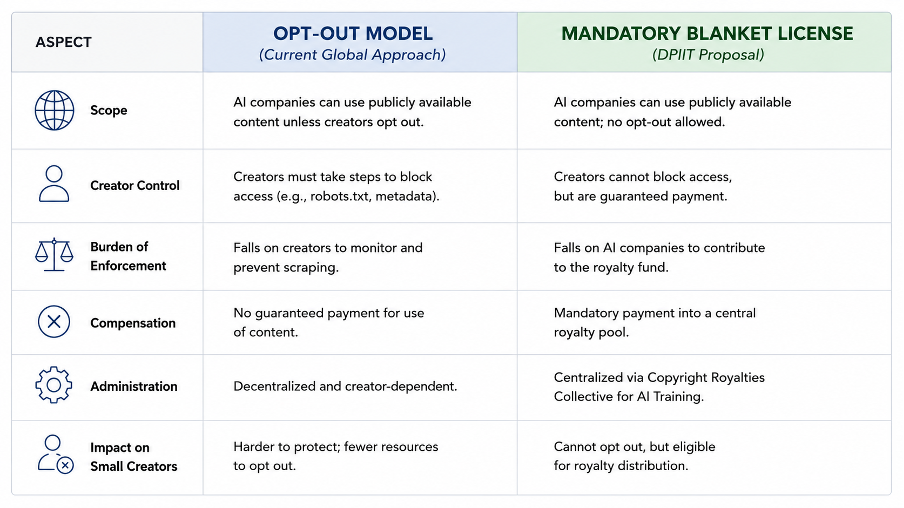
In response, several jurisdictions such as Europe , moved toward what became known as the “opt-out” model. Under this framework, AI companies are broadly allowed to scrape and train on publicly accessible content unless creators actively block access through technical mechanisms such as robots.txt files or metadata restrictions.
The DPIIT paper directly challenges this approach.
Instead of treating opt-out systems as a workable compromise, the paper argues that they unfairly shift the burden of enforcement onto creators themselves.
According to the paper, large publishers and media companies may have the legal teams, infrastructure and technical capacity to monitor scraping activity or deploy protective systems. Independent writers, musicians, illustrators and small publishers generally do not.
In other words, the paper argues that copyright protection becomes dependent on technological sophistication rather than ownership itself.
The paper also points to another structural problem: once AI systems ingest and process training data, the extraction is effectively irreversible. Even if infringing material is later identified, creators cannot realistically remove their contribution from a trained model after the fact.
Opt-Out vs Mandatory Blanket License
That is the context in which the DPIIT proposes its alternative.
The DPIIT alternative
Rather than preserving an absolute right to refuse AI training access, the working paper recommends a mandatory blanket licensing system combined with a statutory royalty mechanism.
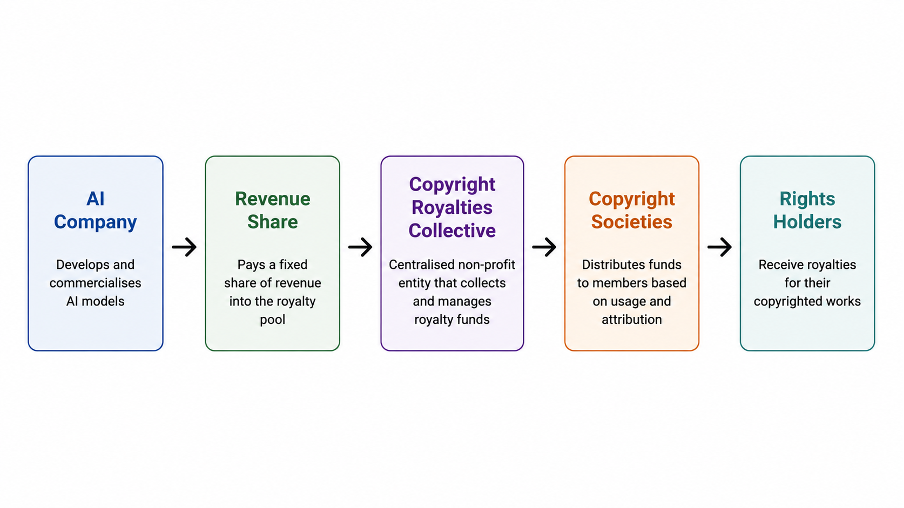
Under this proposal, copyright holders would not have the legal ability to completely block the use of publicly accessible content for AI training purposes. Instead, AI companies developing commercial models would be required to contribute a fixed share of revenue into a centralised royalty pool.
The government’s reasoning is largely practical. The paper repeatedly acknowledges that negotiating millions of individual licensing agreements across the internet is operationally impossible.
To administer this system, the paper proposes the creation of a government-designated non-profit entity called the Copyright Royalties Collective for AI Training.
The collective would function as a centralised intermediary. AI companies commercialising models trained on copyrighted material would pay into the fund. The collective would then distribute royalties to copyright societies and registered rights holders based on usage and attribution frameworks that are still being developed.
How the money would flow
This is the core trade-off embedded in the proposal.
The core trade-off
Creators lose the absolute right to exclude AI systems from training on publicly accessible works. In exchange, they gain a legally enforceable right to remuneration.
The debate, therefore, shifts away from “Can AI companies use my work?” toward “How should creators be compensated when they do?”
Although the proposal remains a working paper rather than binding law, it offers one of the clearest indications yet of how governments may attempt to operationalise AI-era copyright systems at scale.
For creators, the implications are practical as much as philosophical.
What this means for creators? The practical implications
If this framework evolves into law, discoverability and documentation may become financially critical.
The paper repeatedly emphasises verifiability. Any future royalty distribution system would depend on identifying rights holders and matching works to ownership records. In effect, creators who are not formally registered or documented may struggle to participate in compensation systems even if their work is used.
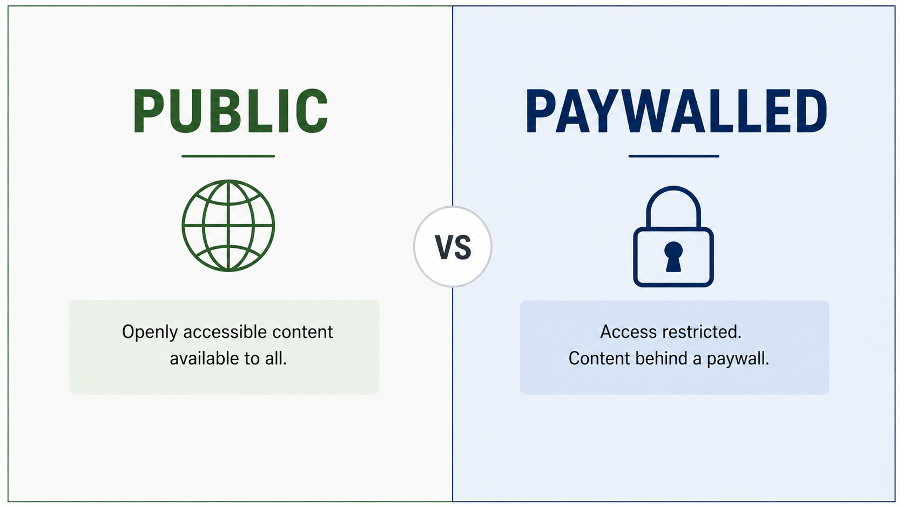
The proposal also distinguishes between publicly accessible material and gated content. Since the framework is built around “lawfully accessed” data, subscription-protected or access-controlled work could occupy a different legal category from openly available content.
That creates a new strategic question for creators: what remains public, and what moves behind a paywall?
The paper also hints at a shift in evidentiary burden.
Once a creator establishes ownership, AI developers may eventually be required to demonstrate that protected material was not included in training datasets. That would represent a substantial procedural change from current enforcement dynamics in which creators often struggle to prove the use of training data in the first place.
The bigger picture
India is not merely reacting to AI copyright disputes after the fact. It is attempting to design an institutional framework for how AI royalties could function in the future.
The lawsuits in Delhi may dominate headlines today. But the more consequential development may be happening outside the courtroom , inside policy papers, licensing proposals or the royalty infrastructure.
For creators, publishers and media companies, the message emerging from the DPIIT paper is increasingly clear:
The next phase of the AI copyright debate may no longer centre on stopping AI training altogether. It may centre on who gets paid, how much and through what system.